Aerobic Septic Problems & Solutions
Common issues, preventive maintenance tips, and documented case studies from our licensed specialists
Many aerobic septic system problems can be prevented through basic maintenance and regular inspections. These practices greatly extend the life of your aerobic treatment unit. Below, we document the most common issues we see—and the uncommon ones that can smolder for years before manifesting.
Common Problems
Air Pressure
During our inspection visit, one of the main things we check for is the air system on your aerobic treatment unit. If your septic system's air pressure is too high or low, it could cause several different problems depending on its pressure range.
HIGH Air Pressure
- • More frequent pump-outs
- • High solids build-up in pump tank
- • Premature air pump failure
NORMAL Air Pressure
- • Less frequent pump-outs
- • Bacteria can breakdown solids and waste more efficiently
- • Helps extend the lifespan of your air pump
NO Air Pressure
- • Bad odor
- • Untreated wastewater sprayed onto lawn
- • Constant alarm state on controller

Example of HIGH air pressure in the treatment tank (almost no bubbles).

The bubble count is much higher after cleaning the air stones (much more air entering water).
This could be caused by any of several issues (broken pipe, damaged diaphragms, clogged intake filter, etc).
Wire Connections
Some installers and manufacturers make wiring connections for the water pump inside the pump tank. However the water in the pump tank produces hydrogen sulfide gas and chlorine gas from the chlorine treatment. Both of these compounds are highly corrosive. Corroded wires will cause a short in the water pump and possibly even a short in the controller.
High Solids? Time to Pump!
There are multiple compartments in your treatment unit. We check the levels in each one during our inspection visits to help prevent future issues that may arise with your septic system.
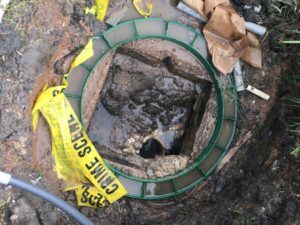
Side-effects of high solids:
- Premature water pump failure
- Solids spraying onto lawn
- Clogged filters, backed-up system
Need more info? Check out our section on Septic Pumping.
Inaccessible Openings
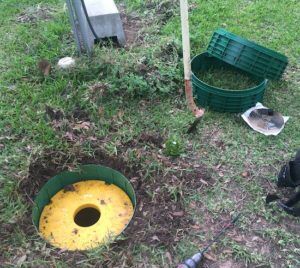
Buried, or otherwise inaccessible tank openings, present a wall of sorts to maintenance providers such as ourselves. It prevents us from fully inspecting your system. We're unable to determine if the septic system needs pumping, has aeration problems, or has a working aerobic chamber.
Additionally, when you have your aerobic treatment tank vacuumed out, most pumping companies will charge extra to dig these openings up, or even worse, not bother with them at all, leaving only part of your tank clean.
Root Infiltration
Many times, when a tree grows nearby an aerobic septic system, its roots will find their way inside. Even if the tree is over 15 feet away from your main tank, roots branch out and then expand, causing damage to pipes, conduit, or even your tank.
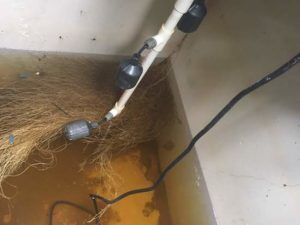
These roots have infiltrated this pump tank.
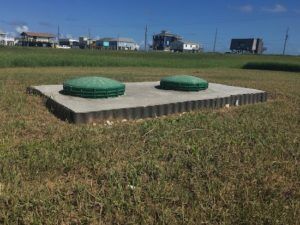
This root barrier stops grass roots from entering the septic tank.
The best way to avoid this is to keep trees and large shrubbery away from your septic system. If needed, in certain situations we'll install a root barrier, preventing smaller roots from entering your tank. (Tanks installed at ground level can be infiltrated by grass roots, even though they're tiny!)
Uncommon Problems: Case Studies
Other types of aerobic septic problems can be caused by factors outside of our control. These issues can smolder for years before manifesting. See our well-documented case studies below.
Case Study #1: Missing Trash Tank
Background
Before a manufacturer of an aerobic wastewater treatment system can sell a particular model in Texas, it is sent to a testing facility for a rigorous six month operational test.
These six month long tests cost a manufacturer $250,000 for each different model tested. After receiving the TCEQ seal of approval, that system must be installed as tested by the facility. For obvious reasons, there can be no changes to the installation procedures and equipment.
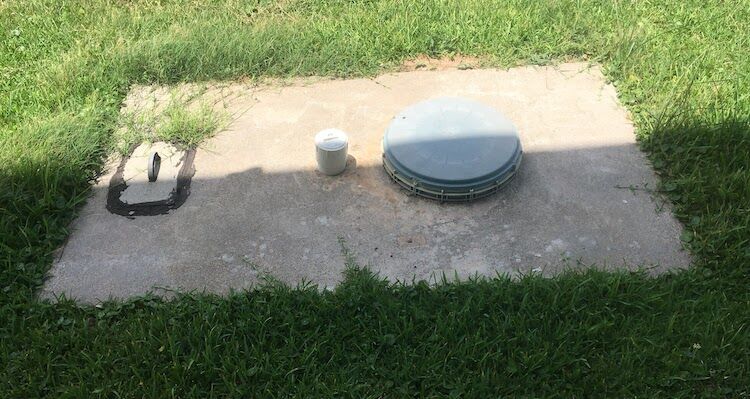
This case study is about a TCEQ-approved two-tank aerobic wastewater treatment system (trash/pre-treatment + ATU) installed without the trash/pretreatment tank (ATU only).
Situation
Twenty years ago, the environmental health department of a county on the gulf coast arbitrarily changed the design parameters of a TCEQ approved waste water system. Years later, Advanced Aerobic Systems became the maintenance provider for new clients who all had the same complaint: during heavy rain/storm events, or high tides (neap tides) their aerobic wastewater system would back up into their elevated beach homes.
Observations
These county-permitted wastewater systems were installed without the TCEQ-mandated trash tank. Sewer effluent from the elevated home flowed directly into the treatment compartment. There was no pre-treatment (settling out of solids) as you would normally have with a trash tank.
The solids are now circulating in the treatment compartment. Compounding the problem, the tank design has an opening directly over the common wall that separates the treatment and clarifier compartments.
When the disposal field became water logged during a heavy rain event or high tide, everything backed up into the home. The elevated water level in the tank allowed the solids from the treatment tank to flow over the common wall into the clarifier. As the water table lowered, solids from the clarifier would then flow into the 8" gravel less pipe in the disposal field. Eventually the disposal field will fill with solids.
Solution
Always install according to tested specs. A separate trash needs to be added to these systems. Don't cut corners!
Case Study #2: Cracked Tank
Background
Before a manufacturer of a particular OSSF can sell their model in Texas, it is sent to a testing facility for a rigorous six month regimen. If the tank cracks during the test it will fail outright. These tests cost the manufacturer $250,000 for each tank. This case study is about an OSSF that had numerous cracked walls.
Situation
Advanced Aerobic Systems became the maintenance provider for an installed OSSF located adjacent to a river. The owner wanted a maintenance contract in place before selling his 4 bedroom home. The tank was three years old.
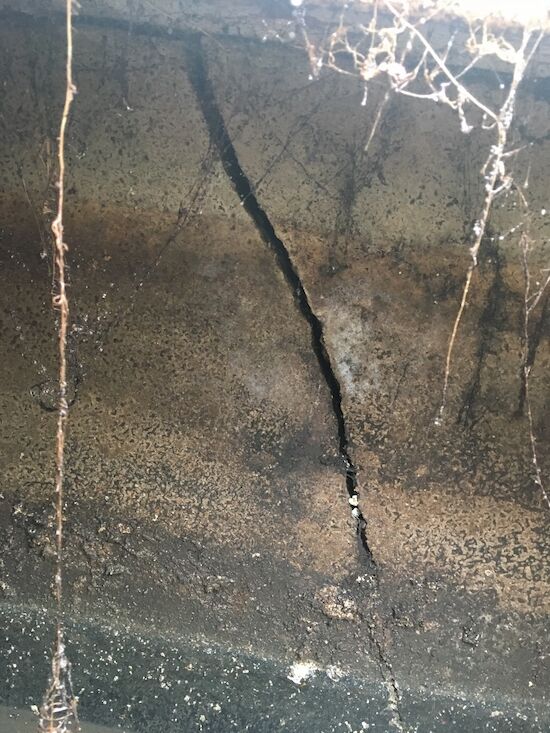
Observations
Our inspection of the one tank, 4 compartment OSSF revealed low water in all 4 compartments. Upon further inspection Advanced Aerobic Systems found large cracks in the common interior tank wall that the pump tank has with three other compartments (trash, treatment and clarifier—see tank diagram). In addition, the pump tank exterior wall was cracked, allowing effluent to escape into the ground.
The effluent in the trash, treatment, and clarifier compartments leaked into the pump tank compartment due to multiple cracks in the common wall separating them. This caused the water level in all tanks to equalize, and ultimately led to untreated effluent with harmful pathogens being pumped out onto the ground.
A detailed inspection was completed and provided to the owner, along with multiple pictures of the tank. We also informed the county of the situation, providing them with our recommendation to replace the cracked tank.
Action
The owner wanted a second opinion from the original installer. That installer said "don't worry about it because the cracks will eventually seal themselves with silt and the tank will work ok".
The county inspector visited the site and because they didn't find "solid waste overflowing" from the system they closed the case. The county indicated that either the owner or installer had to prove that coliform bacteria (pathogen indicator) was being pumped to the spray field. This required taking a water sample to the lab. However, this procedure is not required in this county and therefore was not included on the maintenance contract. On the prima facie evidence of cracked walls and uniform low water levels, other counties would require either the tank be satisfactorily repaired or replaced.
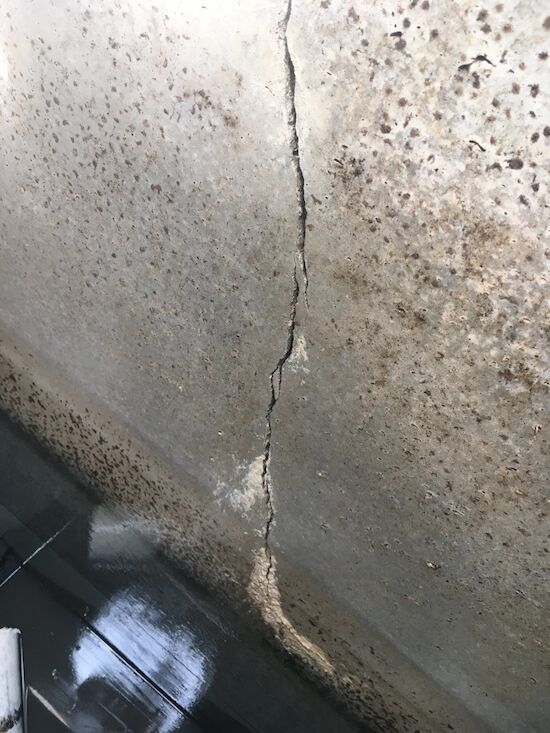
The outer wall is cracked—you can see sand pouring in from outside.
Solution
Ultimately the county did not take further action. The owner sold the house to someone new, who now has no idea their tank is pumping untreated pathogens onto the ground.
Questions About Your System?
Our licensed specialists are here to help diagnose and resolve your aerobic septic issues.
Legal Notice
All content provided by this website is protected under copyright by Advanced Aerobic Systems.